
Employees asked to work from home... cancelled travel plans... curtailed meetings... Caution and precaution dominate Corporate India's response to Covid-19.

Indian airlines have also been advised separately to give relief, an official said.

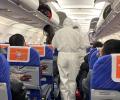
Flight occupancy and fresh bookings have dropped over ten per cent in last few days as individuals and corporates defer trips. International travel is already hit due to a series of visa restrictions.

Airlines sought a limited period concession of the standing rule of slot allocation, which mandates that firms must operate at least 80 per cent of their allocated slots.
"We have found that a couple of international airlines are not adhering to the rules. Failure to adhere to rules shall entail strict action," said Director General of Civil Aviation Arun Kumar.

Executives of Indian airlines said that the drop is primarily for flights to major metro cities like Delhi, Mumbai, Hyderabad, Bangalore, which are the prime revenue generators on the domestic front.
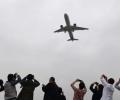
Travel restrictions are in place only for a limited number of countries but people are cancelling or postponing travel to prevent the spread of coronavirus.
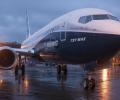
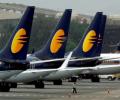
Reduction in fuel price was supposed to bring back good luck for Indian airlines. But with the global spread of coronavirus, airlines are being forced to rejig their network, cut flights, and delay launches.
Over 50 per cent of all traffic to Jeddah consists pilgrims headed to Mecca and Medina.
Apart from the Adani group, the Tata group, the Hinduja group, Indigo and a New York-based fund, Interups, are expected to submit EoIs.
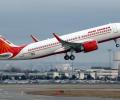
Air India, IndiGo, and SpiceJet have suspended flights to China and Hong Kong.

The new flights come against the backdrop of the Indian government's move to boost air connectivity with Central Asia and tap the interest of Russian investors in India.
A Russian fund submitted its interest to the resolution professional on February 14 and also hired a consultancy firm to help them with the bidding process.

The new service by American Airlines will provide connectivity to tech hubs in both the countries.
Curtailment of flights between India and China will help Air India and other airlines to boost their seat occupancy and market share.

After years of giving free passes to counterparts from Korea, Japan, US in the Indian auto market, Chinese automakers had planned a major push to grab the fifth largest car market in the world. But the shutdown of factories and logistics hubs in the country following the outbreak of coronavirus is slowly constricting the business of Chinese auto majors which have recently entered India.

The number of participating automakers has fallen from 50 in 2018 to 30 this year. The count of exhibitors, including technology companies, has come down from 119 to 112. And showstopper luxury and supercar brands, including Toyota, Jeep, Lamborghini, Porsche, and Volvo will be missing. Similarly, the commercial vehicle makers also gave the show a miss -- a prolonged economic slowdown has dented their fortunes and near chances of any recovery.

Owing to the poor market conditions and tepid sentiments, the size of the show has shrunk compared to the last edition, which took place in 2018. A majority of the two-wheeler makers, and several car and commercial vehicle makers, have opted out of this year's show, which opens for the media on Wednesday.

From Hyundai to Tata Motors, automakers are staring at a bleak future. With no succor provided in the Budget, the pain for companies is likely to continue for the next two quarters.

Chinese automakers Great Wall Motors, FAW Haima Automobile, and Changan Automobile, after dithering about entering India for some years, have been encouraged by the robust sales performance of the late entrants Kia Motors and MG Motors even in a slowing market.
 © 2026 Rediff.com - Investor Information - Advertise with us - Disclaimer - Privacy Policy - Sitemap - Feedback - About us - Terms of use - Grievances